 by tubby » Mon Jul 19, 2010 11:02 pm
http://www.director.co.uk/MAGAZINE/2010/7_July_August/liverpool_football_club_63_11.html
The battle for Anfield
by Mark Jones
It's a tough business turnaround. Can Liverpool Football Club's new chairman, Martin Broughton, reward the fans' fervour by kickstarting a new golden age on Merseyside?
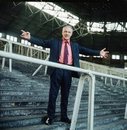
In the history of English football, no man has achieved more. He took over Liverpool Football Club in 1973. By the time he stepped down in 1990, the club had amassed four European Cups, and added three FA Cups and 11 championship titles to its roll of honour. Can you name the man? Here's a clue. His surname is not Shankly; nor Paisley; certainly not Dalglish. No idea? Well, he was plain John Smith—though later dubbed "Dapper John" by loyal fans and "Sir" by the Queen.
Sir John Smith was chairman of Liverpool FC. He arrived at that position in what used to be a typical route: deputy chairman of an engineering firm, sales director of a brewery—a successful local businessman who brought managerial skills to the sporting arena.
Smith paved the way for a provincial English football team to become a global brand and one of international sport's most valuable franchises—not that Smith, who died in 1995, would necessarily have understood why you would use words such as brand and franchise to talk about football.
As we approach a new season, there will be plenty of Premier League fans who may regret that link had ever been made, too. If you are in any doubt about the influence a chairman can have on a football club, consider this statistic. Since Smith stood down, Liverpool have failed, every year, to add to that tally of league titles.
The name John Smith might not mean much to many Liverpool fans today, but the fact that they have not won English football's top prize in two decades is painfully familiar.
Liverpool's new chairman, Martin Broughton, could scarcely recall Dapper John either. You can't blame him. In Broughton's chairmanship—his background, his brief, his expected tenure—there is little of Smith. Smith's philosophy was built on continuity, community and succession. Broughton, conversely, has no ties with Liverpool—and no intention of hanging around to build any. A lifelong Chelsea fan, he has been hired with one objective: to find the right new owners for the club and then move on.
Broughton is calm, wry and thoughtful. Flak doesn't bother him; he rather likes it. This is just as well, given his past and present jobs as, respectively, chief executive of tobacco giant BAT and chairman of British Airways. Usually, he is a picture of composure. But there is something about football that animates the most laid-back soul. When we begin to talk about Liverpool he suddenly starts pacing up and down the room, speaking quickly and passionately, with a football fan's genuine fervour about the job ahead.
"I've taken the role on because Liverpool represents one of two, three or four footballing icons in the league," says Broughton. "Putting them back in their rightful position is in the interests of British football and the league. Seventh [where the club finished in the Premier League last season] is not their rightful position, and neither is administration."
Suspicious fans will note the use of "them" rather than "us". And they may well focus on a much more terrifying word in that sentence... administration. The past 12 months have been traumatic enough—loss of form, loss of manager, a revolt against co-owners Tom Hicks and George Gillett. The prospect of Liverpool joining an anti-elite of basket cases—Portsmouth, Crystal Palace, Luton Town, Chester City—with all the miseries of docked points and forced player sales is still unimaginable on Merseyside. But Broughton can foresee it all too clearly. After all, the club is £237m in debt, but also owes its owners a further £144m.
Smith once said: "We are a very modest club. We don't talk. We don't boast. But we're very professional." You can only imagine what he would have made of it all: not just the plight of his beloved club, but the public way personnel have been carrying on, with snide slanging matches between owners, manager, players and fans. As last season ended, former owner David Moores wrote an impassioned letter to The Times imploring Hicks and Gillett to get out, and get out now. Was the new chairman enraged by his intervention? "No, I just found it sad," says Broughton. "An old man trying to justify what he himself saw as a mistake by blaming everyone except himself. Who chose to sell? He just went for the most money."
For every public row, there are a dozen rumours: players unhappy, others leaving, some buyers suitable and others not so suitable, all mooted in 72-point headlines. Broughton might be comfortable with a flak jacket over his well-tailored suit but surely this is a different theatre of war? There's a long pause. "In terms of intensity it's not very different to BA, where every little detail seems to fascinate the press," he says, finally. Another pause. "The level of misreporting is about the same, but the level of fabrication is higher. Football is a unique business. In any M&A there are various stakeholders but supporters and their passion bring a new dimension."
Smith's relationship with the fans, unlike the current owners', was a model of civility. Not the least part of his genius was to coax them into accepting change. He recognised the managerial assets he had. The first was one of the most charismatic bosses ever seen in the English game, Bill Shankly.
Shankly had an eccentric egoism that seemed to make his stars half-scared and wholly loyal. He was focused: "It's all about this," he said, pointing to the League Championship trophy as it sat on his desk at the end of another high-octane season at Anfield. Shankly, like Smith, was also obsessively customer-focused. Underperforming players were ordered to think of the man on the terraces who'd paid a significant part of his wages to watch his heroes on a Saturday.
The problem with charismatic managers and star players is that they leave a big hole when they leave. At the time that Smith took over, Liverpool's more glamorous foes, Manchester United, were about to enter a period of painful decline that it would take the best part of two decades to get over as their stars, Charlton, Law, Best aged and left, and their giant of a manager, Sir Matt Busby, retired. Shankly anticipated the problem and acted: the heroes of the 1960s—Yeats, St John, Hunt—were unceremoniously let go and, almost overnight, a new generation took over, Hughes, Heighway and Keegan.
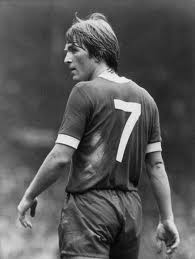
What followed was the club's most successful period. Under Bob Paisley, Liverpool secured a hatful of league titles and three European Cups before the reins were handed to other members of the famous Anfield Boot Room-first, Joe Fagan, and later Roy Evans and Ronnie Moran (see panel, right). After Fagan resigned following the Heysel disaster of 1985, Kenny Dalglish, an Anfield hero since Smith brought him to the club in 1977, took over as player manager.
Dalglish won the league and cup double in 1986 and then put together what many believe to be the finest Liverpool team. From being a highly conservative organisatio—it took the club years to accept perimeter advertising—Smith now oversaw a club that was years ahead of its rivals on and off the pitch. Then, in 1989, 96 lives were lost at Hillsborough.
The team and Dalglish soldiered on to that last title in 1990, but as the new decade dawned, the manager, the team and the ethos of the club were worn out. Smith stepped down and Liverpool became just another team—a top team, true—as managers and players came and went while Alex Ferguson at Manchester United generated team after title-winning team. Dalglish quit in 1991.
The latest managerial incumbent, Rafael Benitez, left the club in June, replaced on 1 July by Roy Hodgson. As for Broughton, it's clear that a change was always in his mind. "Remember, over the past five years, LFC is second only to Chelsea in terms of gross and net player spend. The question is whether the money has been spent wisely."
Broughton has to achieve a lot in a short time. He needs to find a buyer with deep pockets as opposed to one such as the current owners, and the unpopular Glazers at Manchester United, who offer only increasingly stretched lines of credit. "As long as we get sensible offers, we can do a deal," he says. "We are out there to find someone wealthy. But it's important that they can win popular support."
The key area of negotiation will be between the audited value of property and players—estimated at £350m—and the premium payable for the name. Broughton refuses to put a value on the club, but sees it as "a trophy asset worth a lot of money".
Trophies have clearly always been important to Liverpool. Now Broughton needs to persuade a buyer that the club itself is still a trophy worth chasing. As he does so, every meeting and every word will be reported upon and scrutinised by an obsessive media and an even more devoted set of fans.
Club with a global reach
"Form is temporary, class is permanent" is a well-worn football cliché, writes Andy Milligan. It also applies to brands. Every brand has its ups and downs. Perrier, Tylenol and Tiger Woods have had worse setbacks than Liverpool Football Club.
Liverpool's brand is strong: it has a unique heritage, imagery and a personality derived from its fans and the city. Its decade in the Champions League and as one of the big four in the English Premier League ensured global reach, relevance and lucrative broadcasting and sponsorship.
That's an enormous reservoir of goodwill. It carries opportunity, but also threat. The opportunity is global: the world football market is growing exponentially and consumers are eager, particularly in Asia, and especially in India. Liverpool can market its famous brand from Beijing to Bangalore and beyond: from replica clothing to downloadable content. All underpinned by strong commercial rights and ever-larger broadcasting deals.
The threat is local. Club brands originate from an authentic community; the "Chelski" jibe, applied to Chelsea since Roman Abramovich took over expresses both fan banter and consumer misgiving. If foreign owners antagonise local fans, the brand is damaged. Worse still, what if highly leveraged owners can't even afford to maintain Liverpool's spot in the Premier League? Then the brand loses reach, relevance and revenues. If you think that's impossible, just ask Leeds United.
Andy Milligan is author of Brand It Like Beckham, an updated version of which is published by Marshall Cavendish, £9.99
The Boot Room Boys
It's a crucial question for businesses and one vital for future success... how do you replace key executives when they move on? Companies facing this dilemma would do well to look at how Liverpool tackled succession planning in their glory days under Sir John Smith's chairmanship.
The Anfield Boot Room is perhaps the most effective engine of succession management ever seen in business or sport. It was here, in a pokey cubbyhole beneath the stands, surrounded by muddy football boots, that Bill Shankly would gather his cohorts to talk, for hours and hours, about the game. Those men—Bob Paisley, Joe Fagan, Roy Evans and Ronnie Moran—would all manage the club when their turn came.
After Shankly left in 1974, there was a clamour for Smith to bring in a big name—Ron Greenwood, perhaps, or even Brian Clough. But Smith went straight to the Boot Room. The job went to Paisley, a tongue-tied Geordie as self-effacing as Shankly was ebullient. He became the most successful manager in British football.
When he retired the mantle passed to Fagan. But what happened next showed the power of events, especially tragic events, to wreck the most well-run company. At the end of Fagan's second season, with Liverpool having motored to another European cup final, fighting between fans at an inadequate Heysel stadium in Brussels led to the deaths of 39 people.
In the post-traumatic shock, Fagan resigned and Smith skipped the Boot Room boys to appoint star striker Kenny Dalglish as player manager. But later he would tap this valuable talent source again with the appointments of Moran and Evans.








 by
by